
A doctor in the cabin, without leaving the ground.
At 38,000 feet, cabin crew are the first responders. Parsys gives them a station to examine the passenger and a live link to a ground-based doctor over the aircraft's connectivity.

- 30+
- medical calls per day on average
- 5
- devices sending readings by Bluetooth
- 1 year
- of joint design with Emirates teams
- 24/7
- link to Emirates Ground Medical Support in Dubai
Saving lives in the skies, with Emirates.
Emirates and Parsys spent a year co-designing a telemedicine station. It now flies on more than 300 Emirates aircraft, and all of the airline's almost 25,000 cabin crew are trained on it.
- Telecardia® 12-lead ECG, pulse oximeter, thermometer, blood pressure monitor and glucometer send readings by Bluetooth: no notes to take.
- MedCapture®, configured to Emirates' medical procedures, guides the crew step by step.
- Parsys Cloud sends the case to Ground Medical Support, with live video when a doctor needs to see the passenger.
On a flight to Lyon, an elderly passenger's oxygen level dropped sharply. The crew gave oxygen and shared her vital signs through MedCapture; the ground team, via Parsys Cloud, guided them until the situation was under control.
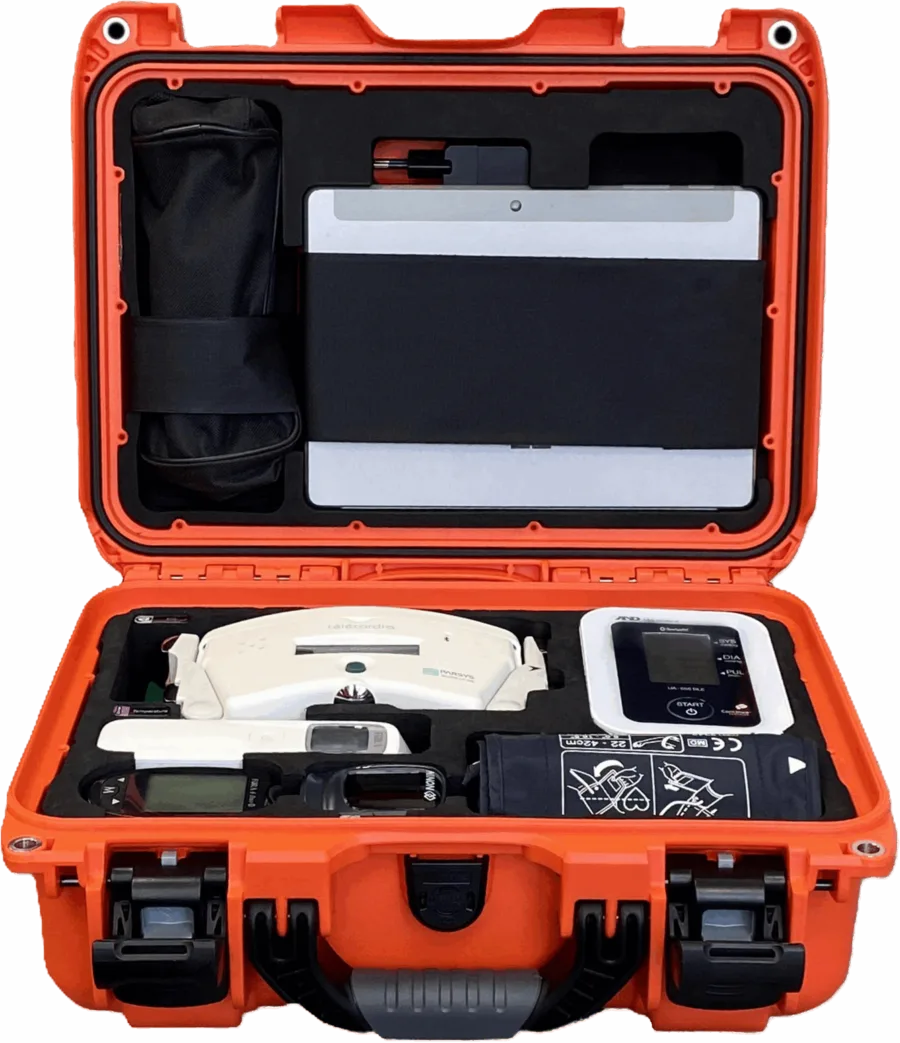
On board, ready for the next emergency.
Station S1 holds everything the crew needs to examine a passenger with a doctor on the line. It complies with RTCA DO-160 for airborne equipment.
- Open, follow, send: MedCapture guides the crew step by step, in their language, and sends results to the ground physician.
- Diagnostic data: 12-lead Telecardia ECG, blood pressure, oxygen saturation and temperature; stethoscope, otoscope, glucometer or ultrasound optional.
- Every item in its place: a fitted foam insert shows missing equipment at the pre-flight check.
- Battery powered: the tablet and each device run on their own batteries, so the exam needs no aircraft power.
- Built for satellite: works on low, variable in-flight bandwidth and keeps data if the link drops.
- Better decisions: the ground physician has objective data when a diversion is on the table.
- Standard
- RTCA DO-160
- Size & weight
- 391 × 307 × 173 mm, 4.8 kg
- Screen
- 10.5-inch touchscreen tablet
- Links
- Bluetooth devices, Wi-Fi to the aircraft's connectivity
Everything a fleet needs, managed centrally.
Fleet-wide telemedicine is a logistics project. We run it with you.
Configuration
Devices, workflows, languages and medical provider routing tailored to your operation.
Crew training
E-learning and hands-on sessions for cabin crew, with demo modes for recurrent training.
Fleet management
Remote monitoring of every station, over-the-air updates and usage reporting.
Support & upkeep
Hardware maintenance, replacement and technical support across your network.

Equip your fleet.
Tell us about your aircraft, connectivity and medical provider; we'll propose a rollout plan.